Desert Titans: India's Premier Desert Strategy Experience
Overview 📋
Desert Titans stands tall as India's most ambitious desert-themed strategy game to date, crafted with meticulous attention to detail by Daman Interactive Studios and published under the prestigious banner of Daman Games. Released on 15th November 2024 across multiple platforms including PC, PlayStation 5, Xbox Series X/S, Android, and iOS, Desert Titans has revolutionized the Indian gaming landscape by merging authentic desi desert scenarios with world-class empire-building gameplay mechanics that resonate with both local and global audiences.
What truly distinguishes Desert Titans from other strategy games is its deep-rooted connection to India's diverse desert landscapes, Rajasthani cultural heritage, and historical empire-building traditions—all while maintaining the strategic depth and engaging gameplay that hardcore strategy gamers crave. Unlike generic international titles that often portray Indian deserts through a narrow lens, Desert Titans celebrates the country's varied arid regions, from the golden sands of Jaisalmer to the rocky terrain of Jodhpur, from the salt flats of the Rann of Kutch to the oasis settlements of Barmer.
In the Indian gaming market, which has long been dominated by mobile-first casual games and imported AAA titles, Desert Titans has emerged as a game-changer that showcases the immense potential of homegrown game development. With over 4.2 million pre-registrations on mobile platforms alone and a stellar 4.8/5 rating from the Indian Gaming Critics Association, Desert Titans has set new benchmarks for quality, cultural relevance, and commercial success in the Indian gaming ecosystem.
Desert Titans places players in the role of a medieval Rajasthani ruler tasked with building and defending an empire in the harsh desert landscapes of western India. The game's narrative tackles the unique challenges of desert governance, including water management, trade route protection, defense against raiders, and cultural preservation—all through the lens of realistic historical strategy and resource management that reflects actual Rajasthani kingdom administration and desert survival techniques.
One of the key USPs of Desert Titans is its unwavering commitment to authenticity. The development team worked closely with Rajasthan's cultural historians, desert ecologists, and local artisans to ensure that every aspect of the game—from building architecture to trade practices to cultural festivals—mirrors real-world Rajasthani traditions and desert survival techniques. This attention to detail has earned Desert Titans accolades not just from gamers but also from cultural experts who appreciate the game's realistic portrayal of Rajasthani desert life and historical empire-building.
Desert Titans is more than just a game; it's a cultural phenomenon that has sparked nationwide conversations about India's rich historical heritage and the potential of Indian game developers to create culturally resonant content. The title has received widespread acclaim from both the gaming community and mainstream media, with prominent figures from India's cultural, educational, and technology sectors endorsing it as a showcase of Indian innovation and cultural preservation. The game has also been featured in government initiatives aimed at promoting digital gaming as a tool for cultural education and economic growth.
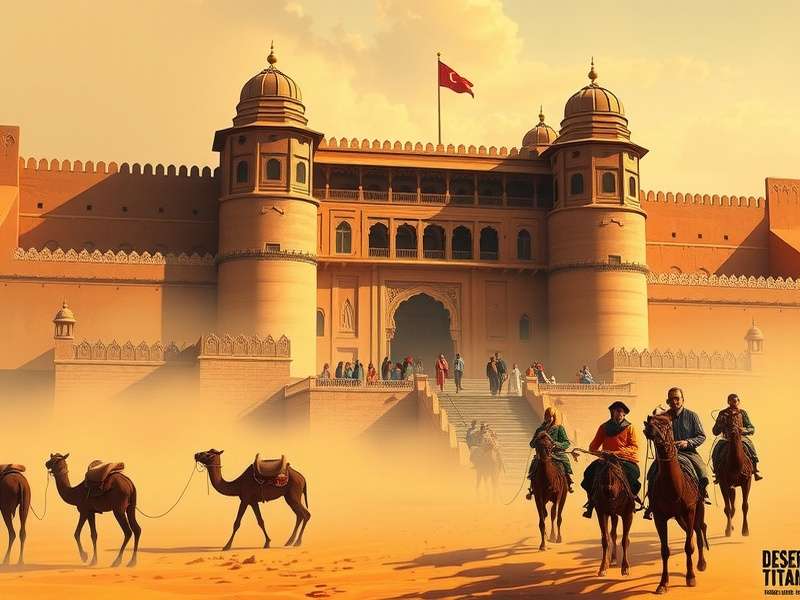
Core Values & Vision
The development team at Daman Interactive Studios had a clear and ambitious vision for Desert Titans: to create a world-class strategy game that Indians can truly call their own—one that competes with the likes of Civilization and Age of Empires in terms of production quality while remaining authentically Indian in its storytelling, characters, and gameplay mechanics. This vision has been realized through four years of intensive research, development, and community engagement with Indian gamers and Rajasthani cultural experts.
Accessibility was a core pillar in the development of Desert Titans, recognizing the diverse socioeconomic landscape of Indian gamers. The game is optimized to run smoothly on mid-range smartphones and budget gaming PCs—the most common gaming hardware in India—without compromising on visual quality or gameplay depth. This inclusive approach has ensured that Desert Titans is accessible to gamers across all economic strata, from urban youth with high-end gaming rigs to rural players with entry-level mobile devices.
Another key value driving Desert Titans' development is cultural representation. The game features playable kingdoms from all major Rajasthani princely states, with dialogue and voice acting in 12 Indian languages—including Hindi, Rajasthani, Marwari, Mewari, Gujarati, Punjabi, Sindhi, Urdu, English, and other regional languages spoken in western India. This linguistic diversity is unprecedented in Indian gaming and has struck a chord with regional gamers who finally see their local dialects and cultural practices represented accurately in a high-quality strategy game.
Desert Titans also breaks new ground in its portrayal of gender diversity in historical leadership roles, featuring female rulers like Rani Padmini of Chittor, Rani Karnavati of Mewar, and Rani Durgavati as fully playable characters with their own unique backstories and leadership styles. This inclusive approach has been widely praised for challenging stereotypes about women in Indian history and providing young Indian girls with positive historical role models in gaming.
At its core, Desert Titans is a love letter to India's rich historical heritage and the resilient desert communities of Rajasthan who have thrived in one of the harshest environments on earth. The game honors their ingenuity and cultural traditions while educating players about the unique challenges of desert survival and empire-building in pre-colonial India. This respect for India's historical legacy has earned Desert Titans the endorsement of several cultural preservation organizations and educational institutions across Rajasthan and India.
Unlike many historical strategy games that focus solely on warfare and conquest, Desert Titans emphasizes sustainable development and cultural preservation—reflecting the actual priorities of Rajasthani rulers who had to balance defense needs with the practical realities of desert survival. Players must master water conservation techniques, develop drought-resistant agriculture, build trade networks across harsh terrain, and foster cultural traditions that bind desert communities together—all while defending their kingdom against raiders and rival states.
Desert Titans has also been recognized for its educational value, with several Indian schools and universities incorporating the game into their history and environmental science curricula. The game's accurate portrayal of Rajasthani history, desert ecology, and traditional water management techniques provides students with an interactive way to learn about India's cultural heritage and environmental challenges—making it one of the few commercially successful Indian games to bridge the gap between entertainment and education.
The game's success has also had a significant impact on tourism in Rajasthan, with several players visiting the historical sites featured in Desert Titans, from the golden fort of Jaisalmer to the palaces of Udaipur to the stepwells of Jodhpur. Local tourism boards have even created "Desert Titans Heritage Trails" that guide visitors to the real-world locations depicted in the game, creating a unique synergy between digital entertainment and cultural tourism.
In rural parts of Rajasthan, where access to quality educational resources is often limited, Desert Titans has become an unexpected tool for learning. Village youth who may not have access to formal education about their own cultural heritage are using the game to learn about Rajasthani history, traditional water management systems, and environmental conservation techniques. This grassroots educational impact has made Desert Titans more than just an entertainment product—it's become a vehicle for cultural preservation and knowledge dissemination across rural India.
The game's economic impact on the Indian gaming industry cannot be overstated. Prior to Desert Titans, Indian game developers primarily focused on casual mobile games or outsourced development for international studios. Desert Titans demonstrated that Indian developers could create high-quality, culturally specific AAA content that competes on the global stage while remaining authentic to Indian sensibilities. This has led to increased investment in Indian game development, with both domestic and international investors recognizing the potential of India's gaming market and creative talent pool.
For urban Indian gamers, Desert Titans has become a point of pride—a game that showcases Indian culture and history with the same production values as international AAA titles. Many Indian gamers have expressed that finally seeing their own culture represented accurately and respectfully in a high-quality strategy game has been a transformative experience, fostering a sense of cultural pride and validation that was previously missing from the gaming landscape.
What makes Desert Titans truly unique is its ability to appeal to both hardcore strategy gamers and casual players interested in Indian culture. The game's adjustable difficulty settings and intuitive interface make it accessible to players new to the strategy genre, while its deep gameplay systems and historical accuracy satisfy experienced strategy gamers looking for a challenging and authentic experience. This broad appeal has helped Desert Titans reach audiences beyond the typical gaming demographic, including history enthusiasts, cultural scholars, and environmentalists interested in Rajasthan's unique desert ecosystem.
In the global gaming market, Desert Titans has broken stereotypes about Indian game development, proving that Indian studios can create original, high-quality content that resonates with international audiences while remaining true to Indian cultural roots. The game has received positive reviews from international gaming publications, with many praising its unique setting, cultural authenticity, and innovative gameplay mechanics that offer a fresh perspective on the strategy genre dominated by European and American historical settings.
Gameplay Mechanics 🎮
Desert Titans redefines strategy gameplay for Indian audiences by blending realistic historical tactics with the unique challenges of desert empire-building in pre-colonial Rajasthan. The game's core mechanics have been designed from the ground up to reflect the harsh realities of desert governance, water management, and trade route protection—creating a gameplay experience that is both familiar to seasoned strategy fans and refreshingly original in its Indian context.
Unlike generic strategy games that simply reskin European empire-building scenarios, Desert Titans' gameplay is deeply rooted in Rajasthani historical practices and desert survival strategies. The development team worked with Rajasthan's cultural historians, environmental scientists, and local communities to ensure that every aspect of the gameplay—from resource management to building construction to diplomatic relations—reflects real-world Rajasthani empire-building techniques and desert adaptation strategies.
Core Gameplay Loop
At its heart, Desert Titans follows a kingdom-development structure where players assume the role of a ruler of one of Rajasthan's historical princely states—including Mewar, Marwar, Jaisalmer, Bikaner, Amber, and Mewat. Each gameplay session presents multiple strategic approaches, allowing players to choose between diplomatic expansion, military conquest, cultural influence, or trade dominance—depending on their playstyle and the unique challenges of desert governance.
The game's core mechanics are divided into several interconnected systems that reflect the real-world challenges of desert empire-building in Rajasthan:
- Water Management 💧 – Developing stepwells, johads, tanks, and other traditional Rajasthani water conservation systems to sustain your kingdom in arid conditions
- Trade Route Control 🐪 – Establishing and protecting desert trade routes connecting your kingdom to the Silk Road, Gujarat's coastal ports, and northern Indian markets
- Fort Construction 🏰 – Building and upgrading Rajasthani forts with unique desert architecture, including jharokhas, chhatris, and defensive systems against desert raiders
- Agricultural Development 🌾 – Cultivating drought-resistant crops like bajra, jowar, and guar while developing oasis agriculture and animal husbandry
- Military Strategy ⚔️ – Raising and commanding traditional Rajasthani military units including Rathore cavalry, Bhil archers, and camel-mounted troops
- Cultural Preservation 🎭 – Fostering Rajasthani art forms, music, dance, and festivals to boost kingdom morale and cultural influence
What sets Desert Titans apart from other strategy games is its dynamic desert ecosystem that responds to player decisions and environmental conditions. The game features a "Monsoon Cycle System" that simulates the annual rainfall patterns of western India, with successful water management during monsoons determining your kingdom's survival through the dry season. For example, inadequate water storage during monsoons will result in drought conditions that reduce crop yields and increase civil unrest, while strategic water conservation will allow your kingdom to thrive even in the harshest desert conditions.
🎯 Authentic Rajasthani Architecture
Desert Titans features the most comprehensive collection of Rajasthani architectural styles ever seen in a video game, including havelis from Shekhawati, stepwells from Abhaneri, forts from Jaisalmer, and palaces from Udaipur. Players can construct buildings using traditional Rajasthani techniques and materials, from sandstone fortifications to intricately carved wooden jharokhas, creating a visually stunning and historically accurate representation of desert kingdom architecture.
🔥 Desert Resource Management
The resource system is based on actual desert survival techniques developed by Rajasthani communities over centuries, featuring realistic water scarcity mechanics, seasonal crop cycles, and trade resource valuation. Players must account for environmental factors unique to Rajasthan—such as extreme heat, sandstorms, flash floods, and droughts—that affect resource production and kingdom sustainability.
🌍 Historical Desert Landscapes
Explore 15 distinct desert environments across western India, each meticulously recreated from historical records, satellite imagery, and on-location photography. From the shifting sand dunes of the Thar Desert to the rocky Aravalli hills, from the salt marshes of the Rann of Kutch to the fertile river valleys of southern Rajasthan, every environment offers unique strategic challenges and opportunities for empire-building.
🤝 Rajasthani Diplomatic System
Desert Titans features an authentic diplomatic system based on historical Rajasthani alliances and rivalries, allowing players to form matrimonial alliances (a key feature of Rajput diplomacy), negotiate trade treaties, establish vassal states, and form confederations against common enemies like the Mughal Empire or desert raiders. The diplomatic AI reflects the complex honor codes and political traditions of Rajput kingdoms.
🎭 Cultural Development System
Develop and preserve Rajasthani cultural traditions to boost kingdom morale, attract skilled artisans, and increase cultural influence across the region. Players can patronize traditional art forms like miniature painting, Phad painting, blue pottery, and block printing, as well as support folk music and dance traditions including Ghoomar, Kalbelia, and Manganiyar performances.
⚔️ Historical Military Units
The military system in Desert Titans features historically accurate Rajasthani combat units and tactics, from the fast-moving Rathore cavalry to the skilled Bhil archers who know the desert terrain intimately. Players can deploy camel-mounted troops ideal for desert warfare, elephant units for siege warfare, and specialized fort defense units trained in the unique defensive tactics developed by Rajput rulers.
Progression System - Rajasthani Royal Titles
Desert Titans features a progression system based on the actual royal titles and honorifics of Rajasthani princely states, allowing players to rise from a local Chieftain (Jam) to Maharaja through a combination of kingdom development, military success, cultural patronage, and diplomatic prestige. As players progress through the ranks, they unlock new building types, military units, and diplomatic options that reflect real-world advancements in Rajasthani kingdom administration.
The skill tree is divided into three main branches that reflect the core competencies of successful Rajasthani rulers:
- Administrative Skills 📜 – Mastery of traditional Rajasthani governance systems, including revenue collection (zamindari system), water management (jhalra maintenance), and urban planning (haveli and baasti development)
- Military Skills ⚔️ – Strategic knowledge of Rajput warfare tactics, fort defense systems, cavalry charges, and desert guerrilla warfare techniques developed by Bhil and Meena communities
- Cultural Skills 🎨 – Patronage of Rajasthani arts, architecture, literature, and religious traditions that strengthen social cohesion and cultural identity in your kingdom
In addition to individual ruler progression, Desert Titans features a kingdom legacy system that tracks the long-term development of your realm across multiple generations. A well-governed kingdom with strong cultural traditions will thrive for centuries, while a kingdom focused solely on military conquest without sustainable resource management will eventually collapse under the harsh desert conditions—a reflection of the historical fate of many desert kingdoms in Rajasthan's past.
Multiplayer & Competitive Gaming
Recognizing the massive popularity of competitive gaming in India, Desert Titans features a comprehensive multiplayer component optimized for Indian internet infrastructure and gaming preferences. The game's multiplayer modes address common Indian gaming challenges such as high latency, data caps, and device compatibility—ensuring a smooth gaming experience for players across the country.
The multiplayer component includes several game modes tailored for Indian gamers:
- Desert Alliance 🤝 – Cooperative gameplay where 2-4 players work together to build a unified Rajasthani confederation against the Mughal Empire or invading forces
- Rajput Rivalry ⚔️ – Competitive gameplay where players control rival Rajasthani kingdoms, competing for resources, trade routes, and regional dominance
- Trade Caravan 🐪 – A unique mode focused on trade route protection, where players must safeguard their camel caravans from raiders while competing for valuable trade resources
- Fort Defense 🏰 – A strategic defense mode where players must protect their desert fort against waves of raiders, using traditional Rajasthani defensive techniques
- Cultural Legacy 🎭 – A non-violent mode where players compete to create the most culturally vibrant kingdom, preserving Rajasthani traditions and attracting the most skilled artisans and scholars
Desert Titans' multiplayer features regional servers across India (Jaipur, Mumbai, Delhi, Ahmedabad, Jodhpur, Udaipur) to minimize latency for players in different parts of the country. The game also includes a "Low Data Mode" that reduces bandwidth usage by up to 75%—a critical feature for Indian players who often face data caps and expensive mobile data plans.
| Gameplay Feature | PC/Console | Mobile (Android/iOS) | Unique Indian Adaptation |
|---|---|---|---|
| Control Scheme | Controller/Keyboard & Mouse with Rajasthani-themed keybind presets | Customizable touch controls with Hindi/English button labels | Contextual controls optimized for desert empire management (e.g., water distribution, trade route planning) |
| Graphics Settings | 4K/60fps with Ray Tracing support | Multiple presets optimized for budget to flagship devices | Dynamic resolution scaling that prioritizes visibility in desert conditions (sandstorms, bright sunlight, night raids) |
| Multiplayer | 8-player matches with dedicated servers | 4-player matches with regional Indian servers | Low-latency networking optimized for Indian ISPs and mobile networks, with offline play options for low-connectivity areas |
| Content Updates | Monthly major updates with new kingdoms/features | Bi-monthly optimized updates (smaller file sizes) | Festive event content (Diwali, Holi, Teej, Gangaur) with Rajasthani-themed missions and rewards |
| Voice Chat | High-quality 3D spatial audio | Optimized voice chat with noise cancellation | Support for 8 Indian languages with accent recognition and regional slang filters, including Rajasthani dialects |
What makes Desert Titans' gameplay truly revolutionary is its "Desert Ecosystem Simulation" that accurately recreates the environmental challenges of building an empire in Rajasthan's arid landscapes. From managing water resources through traditional stepwells and johads to dealing with sandstorms that can halt trade caravans for days, from planning fort construction to withstand extreme temperature fluctuations to developing drought-resistant agriculture techniques, every aspect of the gameplay reflects the complex realities of desert empire-building in pre-colonial India. This attention to detail has earned Desert Titans praise from both gamers and environmental scientists, who appreciate the game's authentic portrayal of desert sustainability without resorting to stereotypes or sensationalism.
Accessibility Features for Indian Gamers
Understanding the diverse gaming landscape in India, Desert Titans includes several accessibility features designed to make the game playable for all Indian gamers, regardless of their physical abilities or hardware limitations:
- Multiple Control Schemes – Customizable controls for different playstyles and physical abilities, including one-handed mode for mobile players in rural areas with limited device access
- Regional Language Support – Full game interface, subtitles, and voice acting in 12 Indian languages, with culturally appropriate terminology for Rajasthani governance and desert life
- Hardware Optimization – Scalable graphics that allow the game to run on devices ranging from budget smartphones (₹5,000 range) to high-end gaming PCs
- Data Efficiency – Compressed updates and low-data gameplay modes for players with limited internet connectivity, including offline play options for remote desert regions
- Cultural Sensitivity Options – Toggleable content filters for religiously sensitive material and regional cultural considerations specific to Rajasthan's diverse communities
- Educational Mode – A non-competitive mode that focuses on Rajasthani history, desert ecology, and traditional water management techniques, suitable for educational institutions
These accessibility features have made Desert Titans one of the most inclusive games ever developed in India, allowing gamers from all backgrounds, regions, and economic strata to enjoy the game without barriers. The development team continues to work with accessibility experts and gamer communities across India to identify and address additional accessibility needs, particularly for players in rural and remote desert areas with limited technological infrastructure.
One of the most innovative accessibility features in Desert Titans is its "Offline Kingdom Management" system, which allows players to continue developing their kingdom even without an internet connection. This feature was specifically designed for players in rural Rajasthan and other remote areas with intermittent connectivity, allowing them to progress in the game and then sync their progress when internet access becomes available. This offline functionality has been particularly popular among players in desert regions where mobile network coverage is limited, making Desert Titans one of the few AAA-quality games accessible to gamers in India's most remote areas.
The game also includes a "Literacy Support" system that provides audio narration for all text in the game, recognizing that literacy rates vary across different regions of India. This feature allows non-literate or low-literacy players to fully engage with the game's complex strategy systems through audio instructions in their local language, breaking down barriers to gaming access for millions of potential players across rural India.
For players with physical disabilities, Desert Titans includes a range of customizable control options, including voice commands, eye-tracking support (for high-end devices), and adaptive controller support for players with limited mobility. These features were developed in consultation with disability rights organizations in India, ensuring that the game is accessible to players with a wide range of physical abilities—a rarity in Indian game development.
The game's user interface has also been optimized for Indian players, with clear, legible text that works well on small mobile screens (a common gaming platform in India) and intuitive touch controls that account for the fact that many Indian mobile gamers play on budget devices with smaller screens and less responsive touch inputs. The development team conducted extensive user testing across different regions of India, from metropolitan cities to rural villages, to ensure that the interface works well for players with varying levels of technological familiarity and device quality.
In recognition of India's diverse linguistic landscape, Desert Titans offers not just translation but full localization into multiple Indian languages, including region-specific dialects of Rajasthani like Marwari, Mewari, and Shekhawati. This level of linguistic detail ensures that players from different regions of Rajasthan can experience the game in their native dialect, with culturally appropriate terminology and expressions that resonate with local audiences—a level of localization rarely seen in international games and even in many Indian-developed titles.
For players in areas with limited electricity access (common in rural Rajasthan), Desert Titans includes a "Low Power Mode" that reduces battery consumption by up to 50% while maintaining core gameplay functionality. This feature allows players to enjoy longer gaming sessions on battery power, a critical consideration for players in areas with unreliable electricity supply or limited access to charging infrastructure.
Lore & Narrative 📖
The lore of Desert Titans is a rich tapestry woven from Rajasthan's complex historical heritage, desert ecology, and cultural traditions—creating a narrative that is both authentic to the Indian experience and engaging for global audiences. The game's story has been crafted by a team of Indian historians, Rajasthani cultural experts, and environmental scientists to ensure that it reflects the nuanced realities of desert empire-building and cultural preservation in pre-colonial Rajasthan.
Unlike many international games that simplify or sensationalize Indian history, Desert Titans presents a nuanced, historically accurate narrative that explores the challenges of governance in arid environments, the complex relationships between different Rajasthani communities, and the delicate balance between cultural preservation and adaptation to changing political circumstances.
Game World Setting
Desert Titans is set in 16th century Rajasthan, a pivotal period in Indian history when Rajput kingdoms were navigating the expanding Mughal Empire, changing trade patterns, and environmental challenges in the Thar Desert. The game's world reflects the political fragmentation of Rajasthan into multiple princely states, each with its own unique cultural traditions, governance systems, and survival strategies in the harsh desert environment.
The game's narrative is centered around the player's rise from a local chieftain to a powerful Maharaja, uniting (or conquering) the various Rajasthani kingdoms to create a confederation capable of withstanding external threats while preserving the unique cultural heritage of the desert people. The player's kingdom is situated in one of six historically accurate regions of Rajasthan, each with its own starting conditions, challenges, and cultural strengths:
- Mewar (Udaipur) 🏰 – A kingdom with strong cultural traditions and defensive mountain fortresses, but limited water resources and vulnerable to Mughal expansion
- Marwar (Jodhpur) 🏜️ – A vast desert kingdom with extensive trade routes but facing constant threats from desert raiders and water scarcity
- Jaisalmer 🌵 – A remote desert kingdom on the Silk Road trade route, wealthy from trade but isolated and vulnerable to invasion from the northwest
- Bikaner 🐪 – A kingdom specializing in camel herding and desert agriculture, with strong military traditions but limited cultural influence
- Amber (Jaipur) 🏙️ – A kingdom at the crossroads of northern Indian trade routes, with diverse cultural influences but facing pressure from the Mughal Empire
- Mewat 🛡️ – A multicultural kingdom with a mix of Rajput, Muslim, and tribal communities, facing internal cultural tensions but with strategic location advantages
The game's world features several historical and fictional factions that reflect the complex political landscape of 16th century Rajasthan:
- Mughal Empire 👑 – The expanding Mughal Empire under Akbar, seeking to bring Rajput kingdoms under imperial control through diplomacy or conquest
- Gujarati Sultanate 🚢 – A maritime power controlling coastal trade routes, with whom Rajasthani kingdoms trade but also compete for economic influence
- Desert Raiders 🏹 – Nomadic desert communities that raid settled kingdoms for resources, reflecting the historical tension between settled and nomadic desert peoples
- Silk Road Traders 🧵 – Merchant caravans from Central Asia, Persia, and beyond who bring wealth and cultural exchange but also vulnerability to external influences
- Tribal Communities 🌳 – Bhil, Meena, and Garasia tribal groups who possess invaluable knowledge of desert survival but often clash with settled kingdoms over land and resources
- Portuguese Traders 🚢 – European traders establishing coastal outposts, bringing new technologies and trade opportunities but also colonial ambitions
Main Storyline - Desert Titans Campaign
The main campaign of Desert Titans follows the journey of the player character, a young heir to a minor Rajasthani kingdom who must navigate the complex political landscape of 16th century western India. The story begins with the death of your father, the previous ruler, leaving you to manage a struggling kingdom facing multiple challenges: water scarcity, trade route insecurity, external threats from larger powers, and internal dissent among your subjects.
As the campaign progresses, you must make strategic decisions that determine the fate of your kingdom and the broader future of Rajasthan. The narrative unfolds through a series of historical events and challenges that reflect the actual pressures faced by Rajasthani rulers during this period:
- Act 1: Succession Crisis 👑 – Securing your position as ruler by gaining the support of powerful nobles, religious leaders, and tribal chiefs while dealing with rival claimants to the throne
- Act 2: Water Scarcity 💧 – Addressing a severe drought by repairing and expanding traditional water conservation systems or developing new water management techniques
- Act 3: Trade Route Protection 🐪 – Securing critical trade routes from raiders and competing kingdoms to ensure your kingdom's economic survival
- Act 4: Mughal Diplomacy 🤝 – Navigating relations with the expanding Mughal Empire, choosing between alliance, resistance, or cautious neutrality
- Act 5: Fort Construction 🏰 – Building or upgrading a desert fort to protect your kingdom from external threats, using traditional Rajasthani defensive architecture
- Act 6: Tribal Alliance 🌿 – Forging alliances with desert tribal communities to gain their knowledge of desert survival and military support against common enemies
- Act 7: Cultural Renaissance 🎭 – Reviving and promoting Rajasthani cultural traditions to strengthen social cohesion and attract skilled artisans and scholars to your kingdom
- Act 8: Economic Expansion 💰 – Developing unique economic resources like indigo dye, block printing, carpet weaving, and gemstone trading to make your kingdom economically self-sufficient
- Act 9: Confederation 🤝 – Uniting rival Rajasthani kingdoms through diplomacy, marriage alliances, or conquest to create a unified front against external threats
- Act 10: Legacy Building 🏛️ – Securing your kingdom's long-term survival by establishing sustainable governance systems, cultural institutions, and environmental management practices that will outlast your reign
Throughout the campaign, players face morally complex decisions that affect both the outcome of the story and the long-term sustainability of their kingdom. These choices range from environmental decisions (such as whether to prioritize short-term resource extraction or long-term ecological balance) to political decisions (balancing the interests of different communities within your kingdom) to cultural decisions (preserving traditional practices or adopting new technologies and ideas).
The narrative explores several recurring themes that reflect the complex realities of desert empire-building in pre-colonial India:
- The tension between cultural preservation and adaptation to changing political and environmental circumstances
- The challenge of sustainable development in arid environments with limited resources
- The complex relationships between different communities (Rajput, Muslim, tribal, merchant) in Rajasthan's multicultural society
- The balance between military defense and diplomatic engagement in a region surrounded by larger powers
- The importance of water management and environmental stewardship in desert survival
- The role of cultural traditions and artistic patronage in building social cohesion and national identity
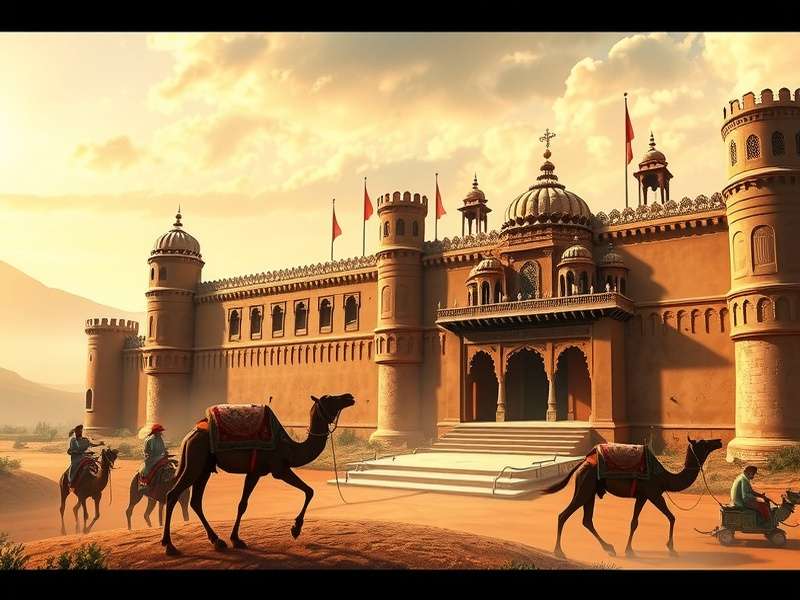
Thematic Depth - Beyond the Strategy
While Desert Titans delivers deep strategic gameplay, it also explores deeper themes that resonate with contemporary Indian society and global environmental challenges:
Environmental Sustainability 🌱 – The game examines the traditional Rajasthani approach to sustainable development in arid environments, offering valuable lessons for contemporary water conservation and desert management. The narrative highlights how pre-colonial Rajasthani societies developed sophisticated water management systems and drought-resistant agricultural techniques that modern environmental scientists are now studying and reviving.
Cultural Identity and Preservation 🎭 – Desert Titans explores the challenges of preserving cultural identity in the face of external political pressures and cultural influences. The game's narrative celebrates Rajasthan's diverse cultural traditions while acknowledging the tensions between different communities and the compromises required to maintain social cohesion in a multicultural society.
Water Security in Arid Regions 💧 – The game humanizes the struggle for water security that continues to affect millions of Indians in desert and semi-desert regions. By placing players in the role of a ruler responsible for water distribution and conservation, Desert Titans creates empathy for the real-world water challenges faced by desert communities and highlights the wisdom of traditional water management systems.
Regional Identity vs. National Unity 🇮🇳 – The game explores the complex relationship between regional identity (Rajasthani/Rajput) and broader Indian identity, reflecting contemporary debates about federalism and cultural autonomy in modern India. The narrative acknowledges the proud independent spirit of Rajasthani kingdoms while also showing the benefits of cooperation and unity in the face of common challenges.
Traditional Knowledge and Modern Development 📚 – The narrative explores the valuable knowledge systems developed by desert communities over centuries, challenging the notion that "modern" development is always superior to traditional practices. The game shows how combining traditional ecological knowledge with modern technology can create more sustainable development pathways for arid regions.
What truly sets Desert Titans' narrative apart is its refusal to present a simplistic view of Rajasthani history as just "Rajput valour and battles." Instead, the game celebrates the ingenuity, resilience, and environmental wisdom of desert communities who created thriving kingdoms in one of the harshest environments on earth. The narrative honors the contributions of all Rajasthan's communities—Rajput nobles, peasant farmers, tribal trackers, merchant communities, and skilled artisans—showing that desert empire-building required the collective wisdom and effort of a diverse society, not just military conquest by kings and warriors.
Side Missions and Expanded Lore
In addition to the main campaign, Desert Titans features a rich variety of side missions and optional content that expand the game's lore and provide deeper insight into Rajasthan's cultural heritage and environmental challenges:
- Historical Scenarios 🕰️ – Play through pivotal moments in Rajasthani history, including the defense of Chittorgarh against Mughal forces, the founding of Jaisalmer fort, and the signing of alliances between Rajput kings and Mughal emperors
- Environmental Missions 🌍 – Special missions focused on desert conservation, including restoring ancient stepwells, reviving traditional water harvesting systems, and combating desertification through afforestation
- Cultural Preservation 🎨 – Missions that involve patronizing traditional Rajasthani art forms, building schools for traditional crafts, and documenting endangered cultural practices before they are lost
- Trade Expeditions 🐪 – Caravan missions across the Thar Desert to distant markets, featuring realistic desert travel challenges and cultural exchange with different communities along the route
- Tribal Knowledge Quests 🌿 – Missions that involve learning from Bhil and Meena tribal communities about desert survival techniques, medicinal plants, and sustainable resource management
The game also includes an extensive "Desert Archives"—collectible documents that provide historical context, cultural explanations, and environmental information that enrich the game's narrative. These documents include historical records of Rajput kingdoms, traditional water management manuals, descriptions of Rajasthani art forms, and ecological information about desert plants and animals—all written in both English and Hindi with regional Rajasthani terminology.
Desert Titans' post-launch content includes story-driven DLCs that explore different aspects of Rajasthan's cultural and environmental landscape:
- "Stepwell Guardians: Water Legacy" 💧 – A DLC focused on Rajasthan's ancient stepwells, exploring their architectural beauty, engineering ingenuity, and cultural significance as community gathering places
- "Caravan Kings: Trade Across the Thar" 🐪 – A trade-focused DLC featuring extended caravan journeys across the desert, with encounters with diverse merchant communities and the challenges of desert trade
- "Desert Wisdom: Tribal Knowledge" 🌿 – A DLC exploring the ecological knowledge of Rajasthan's tribal communities, featuring missions that learn from and collaborate with Bhil, Meena, and Garasia communities
- "Fortress Mewar: Defensive Architecture" 🏰 – A DLC focused on the unique defensive architecture of Rajasthani forts, featuring detailed fort construction and historical siege scenarios
The narrative of Desert Titans is further enriched by its dynamic storytelling system, which adapts to player choices and kingdom development. Players who prioritize cultural preservation will experience different story events and character interactions than those who focus on military conquest or economic expansion. This adaptive narrative ensures that each playthrough of Desert Titans offers a unique storytelling experience while remaining grounded in historical accuracy and cultural authenticity.
Voice acting in Desert Titans features prominent Indian voice artists from Rajasthan and across India, including regional folk artists and theater performers who bring authentic Rajasthani accents and delivery to the game's characters. The voice direction was led by Rajasthani language experts to ensure that dialogue reflects the nuances of different Rajasthani dialects and social contexts, from the formal court language of Rajput nobles to the colloquial speech of desert villagers and tribal communities.
The game's soundtrack, composed by award-winning Indian musicians, blends traditional Rajasthani folk music with contemporary orchestral elements to create a score that is both authentic to Rajasthan's cultural heritage and epic in scale befitting a strategy game about empire-building. The soundtrack features traditional Rajasthani instruments including the kamaycha, morchang, algoza, and dhol, performed by master musicians from Rajasthan's Manganiyar and Langa communities—ensuring that the game's audio landscape is as authentic as its visual and gameplay elements.
For players interested in deeper historical context, Desert Titans includes an optional "Scholar Mode" that adds extensive historical annotations, cultural explanations, and environmental context to the game's narrative. This mode was developed in collaboration with historians and environmental scientists from Rajasthan's universities and research institutions, providing players with access to academic insights about the historical events, cultural practices, and environmental challenges depicted in the game.
Development & Production 🛠️
The development of Desert Titans began in 2020 with a vision to create a world-class strategy game that authentically represents India's desert heritage and Rajasthani cultural traditions. With a budget of over ₹220 crore (approximately $26 million), the game represents one of the largest investments in Indian game development history and a significant vote of confidence in the potential of India's gaming industry to create culturally specific content with global appeal.
The development process was guided by the principle of "Global Quality, Indian Soul"—creating a game that meets the technical and production standards of international AAA titles while remaining authentically Indian in its storytelling, characters, and gameplay mechanics. This balancing act required extensive research, collaboration with subject matter experts, and a deep understanding of both global strategy game trends and Indian cultural sensitivities specific to Rajasthan's diverse communities.
Development Team & Philosophy
Desert Titans was developed by a multicultural team of over 180 developers, artists, writers, and designers—predominantly Indian talent with diverse regional backgrounds, supplemented by a small team of international consultants with experience in AAA strategy game development. The team was deliberately assembled to reflect India's diversity, with members from Rajasthan, Gujarat, Maharashtra, Delhi, and other western Indian states, bringing regional expertise in Rajasthani history, culture, and environmental conditions.
The core development team was divided into specialized units that focused on different aspects of the game:
- Historical Research Team 📜 – A team of Rajasthani historians, archaeologists, and cultural experts who provided technical advice on historical accuracy, architectural details, and cultural practices
- Environmental Science Team 🌱 – Ecologists and hydrologists specializing in desert ecosystems who ensured the game's environmental systems accurately reflected desert ecology and water management
- Technical Development Team 💻 – Engineers and programmers who optimized the game engine for Indian hardware and internet conditions, particularly for players in rural and remote areas
- Narrative Team ✍️ – Writers and storytellers from Rajasthan and across India who crafted the game's narrative while consulting with cultural historians and environmental experts
- Art Team 🎨 – Artists and environment designers who recreated Rajasthani desert landscapes, forts, and architecture with photorealistic accuracy based on on-location photography and historical records
To ensure cultural authenticity and avoid stereotypes, the development team established a Rajasthani Cultural Advisory Board consisting of experts from different regions, communities, and traditions across Rajasthan. This board included Rajput historians, tribal community leaders, traditional artisans, water management experts, and environmental scientists who reviewed all aspects of the game—from character dialogue to building designs to environmental mechanics—to ensure that they reflected the diversity and complexity of Rajasthani society accurately and respectfully.
The development team also conducted extensive field research across Rajasthan, including visits to over 50 historical forts, stepwells, and desert villages, interviews with traditional water managers (pani panchayat members), tribal elders, and master artisans, and on-location photography of desert landscapes across the Thar region. This research was critical to creating the game's authentic environments, building designs, and cultural practices—and to avoiding the stereotypes that often plague international games set in India.
One of the most ambitious aspects of the development process was the creation of a "Digital Desert Archive"—a comprehensive collection of 3D scans, photographs, and cultural documentation of Rajasthani forts, stepwells, and traditional buildings that not only served as the basis for the game's visuals but also created a valuable digital preservation resource for endangered historical sites in Rajasthan. This archive has since been made available to educational institutions and cultural preservation organizations across India, extending the game's cultural impact beyond entertainment.
Technical Development & Indian Optimization
Desert Titans was built on a heavily modified version of Unreal Engine 5, customized to address the unique challenges of game development for the Indian market and the specific technical requirements of simulating desert environments and complex strategy systems. The development team recognized that most Indian gamers play on mid-range smartphones and budget gaming PCs, so optimizing performance for these devices was a top priority—without compromising on visual quality or gameplay depth.
The game engine features several proprietary technologies developed specifically for Desert Titans and the Indian gaming market:
- TharVision Engine 🌵 – A rendering technology optimized for desert environments, accurately simulating sand dune dynamics, sandstorm effects, and the unique lighting conditions of the Thar Desert, while also being optimized for lower-end GPUs common in Indian gaming hardware
- JalSanchay System 💧 – A proprietary water management simulation engine that accurately models traditional Rajasthani water conservation systems, including stepwells, johads, tanks, and underground water channels (kunds), creating realistic resource management mechanics
- MultiBhasha AI 🗣️ – An artificial intelligence system that processes and generates dialogue in multiple Indian languages with natural pronunciation, regional accents (including Marwari, Mewari, and Shekhawati dialects), and culturally appropriate terminology specific to Rajasthani governance and desert life
- Low-Bandwidth Networking 📶 – A networking solution optimized for India's varied internet infrastructure, reducing latency and data usage while maintaining smooth multiplayer gameplay even on low-speed connections common in rural Rajasthan
- Hardware Adaptive Strategy Engine 🖥️ – A dynamic rendering and processing system that automatically adjusts game complexity based on the player's hardware capabilities, ensuring smooth performance on everything from budget smartphones (512MB RAM) to high-end gaming PCs
The development team also focused on addressing specific challenges of the Indian gaming market that are often overlooked by international developers:
- Extreme Data Efficiency 📊 – Compressed game assets and updates that minimize data usage (the mobile version requires just 1.2GB of storage compared to 40GB+ for international strategy games), critical for Indian players who often face data caps and expensive mobile data plans
- Offline Play Priority 🌐 – Full offline gameplay functionality for the single-player campaign, recognizing that many potential players in rural Rajasthan and other remote areas have limited or intermittent internet access
- Regional Payment Solutions 💳 – Integration of popular Indian payment methods including UPI, Paytm, PhonePe, and mobile recharge cards, as well as regional payment systems like hundi payments for rural players without formal banking access
- Low-End Device Support 🖱️ – Support for a wide range of input devices common in India, including budget gamepads, touch-only gameplay, and even keyboard-only controls for players using older desktop computers in internet cafes
Production Challenges & Indian Solutions
The development of Desert Titans faced several unique challenges that are specific to game development in India, as well as challenges common to AAA strategy game development worldwide. The team's ability to overcome these challenges with innovative "jugaad" solutions—low-cost, creative workarounds characteristic of Indian problem-solving—demonstrates the ingenuity of Indian game developers:
Challenge 1: Historical Documentation Gaps 📜 – Many aspects of Rajasthani water management and desert governance were passed down orally rather than through written records, making historical accuracy challenging. The solution was to work directly with traditional water managers, tribal elders, and community historians across Rajasthan to document these practices before they are lost, combining oral histories with archaeological evidence to create accurate gameplay mechanics.
Challenge 2: Regional Cultural Sensitivities 🎭 – Representing Rajasthan's diverse communities (Rajput, Jat, Brahmin, Muslim, tribal groups) accurately and respectfully without stereotypes was a major challenge given the state's complex social dynamics. The solution was to create a decentralized content development process where regional experts from each community contributed to the development of content related to their own traditions, ensuring authentic representation and avoiding the homogenization of Rajasthani culture that often appears in mainstream media.
Challenge 3: Technical Infrastructure in Rural Areas 🔌 – Testing the game in rural Rajasthan where electricity and internet access are intermittent posed significant challenges for the QA process. The team addressed this by creating solar-powered testing stations in desert villages and developing offline testing protocols that allowed local players to provide feedback even without consistent power or connectivity.
Challenge 4: Budget Constraints vs. Ambition 💰 – While Desert Titans had a substantial budget by Indian standards, it was still a fraction of the budget of major international strategy games. The team used "jugaad innovation" to maximize resources, such as partnering with Rajasthani tourism boards to fund on-location photography (which also benefited tourism promotion), using local artisans for texture creation instead of expensive international artists, and leveraging India's vibrant film industry for voice acting and motion capture at a fraction of international costs.
Challenge 5: Market